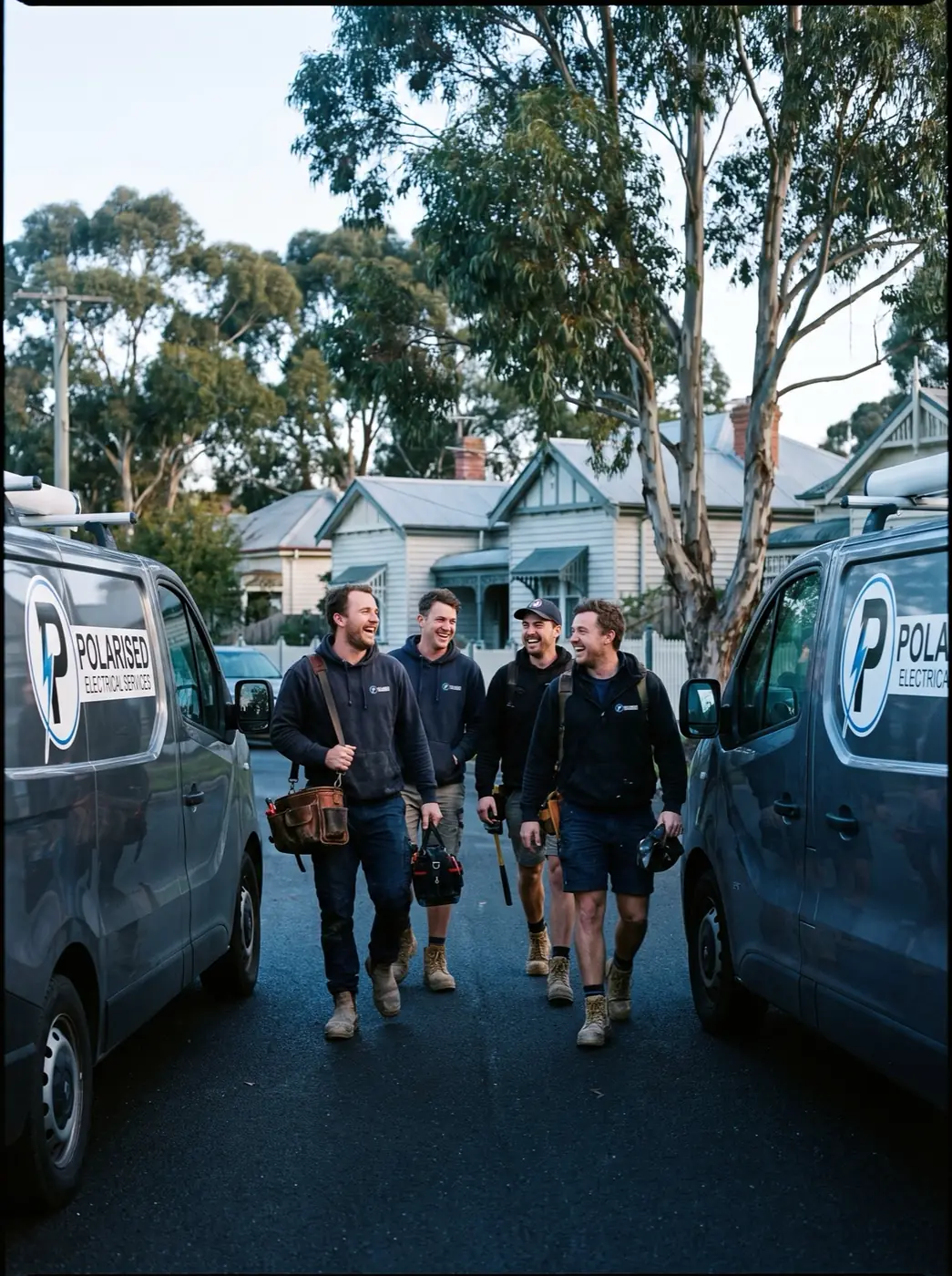
With roughly 1957 residents per square kilometre, Ferntree Gully blocks have a front approach, a side gate and a rear yard. That is three genuine camera positions before you consider the garage. At roughly 150 metres, Ferntree Gully has enough fall on most blocks that a single well-placed camera can see the whole approach.
Being around 30 kilometres from the city, Ferntree Gully has the roof access that keeps an install clean, and newer switchboards with somewhere sensible to power the recorder. For Ferntree Gully, Knox matters mainly if a camera goes on a heritage-controlled facade. The bigger constraint everywhere is keeping the field of view inside your own boundary.
Because Ferntree Gully backs onto Boronia and Knoxfield, a second visit is rarely a second trip for us. Postcode 3156, about 14 square kilometres, 27398 residents at the 2021 census: that is the shape of Ferntree Gully inside Knox.
Worth knowing about the place: == Transport ==
Ferntree Gully has a railway station located on Station Street, near the shopping district, which was previously known as Lower Ferntree Gully, followed by Fern Tree Gully, having been changed to the latter on 29 February 1972. The build era tells us what the eaves and wall cavities will be like, and that decides how the cable gets in. Boronia, Knoxfield, Lysterfield and Rowville and Ferntree Gully form one continuous area for us rather than a list of separate suburbs.
Our workshop is in Boronia, 2.7 kilometres south of Ferntree Gully. That proximity is the whole reason we can hold a fixed quote rather than pricing in the unknown. For context on the older parts of the suburb: The area became more accessible to visitors with the arrival of a railway line extension from Ringwood, completed in 1889.
And on the history that shaped the streets: Officially opened on 17 October 1959 as the Mountain Gate Estate, it was marketed as the "town of a thousand homes" incorporating a modern car-oriented shopping centre and public parkland.