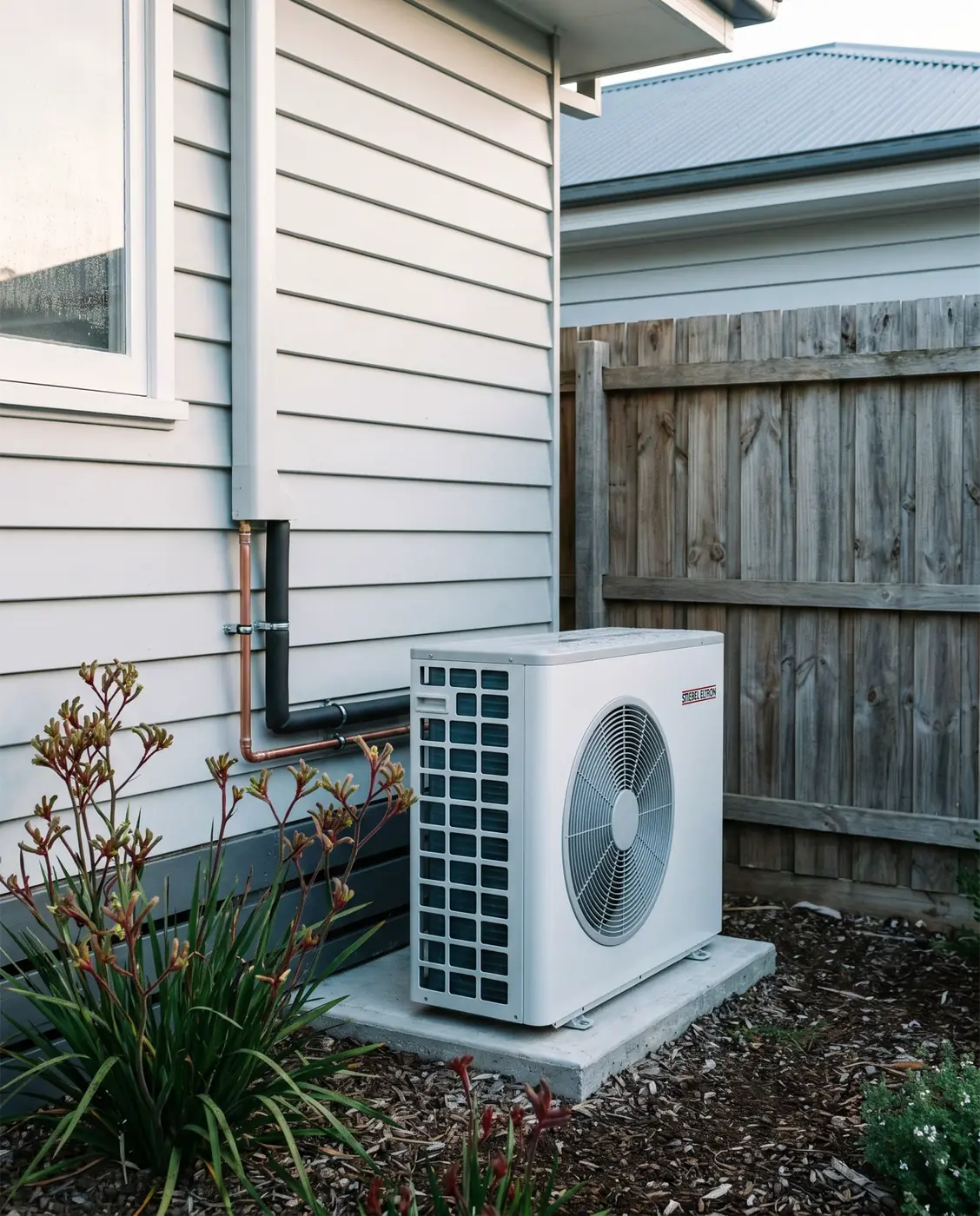
Around 2410 people per square kilometre puts Balwyn in the part of Boroondara where full ducted replacement is the common job rather than the exception. Sitting at about 84 metres, Balwyn is level ground. That makes ducting straightforward and condensate the thing to watch.
Being roughly 10 kilometres from town, Balwyn has the tight ceiling cavities that come with older construction. Ducted is still possible in most of them, but the design has to respect what is actually up there. Balwyn falls under Boroondara. That matters less for the install itself than for where the unit can legally sit, and it is worth settling before anyone orders equipment.
We treat Balwyn, Balwyn North and Canterbury as one working area rather than three separate postcodes. In Boroondara, Balwyn occupies about 5.6 square kilometres. The 2021 census counted 13495 residents, and the postcode is 3103.
A note on how Balwyn came to look the way it does: === 19th century ===
Following the Foundation of Melbourne, Balwyn was part of Henry Elgar's Special Survey of 8 square miles (21 km2) in 1841, which was subdivided into small farms and grazing runs. The build era is the first thing we factor into a capacity assessment. We are across Balwyn along with Balwyn North, Canterbury, Deepdene and Kew, on the same rates and the same certificate.
Our Boronia workshop is about 12976.6 kilometres north-west of Balwyn, which keeps both the response time and the price honest. A second note on how the suburb came to be: The Outer Circle railway line, with a station at Deepdene, opened in 1891, was closed in 1893, re-opened in 1900 then finally closed to passenger traffic in 1927.