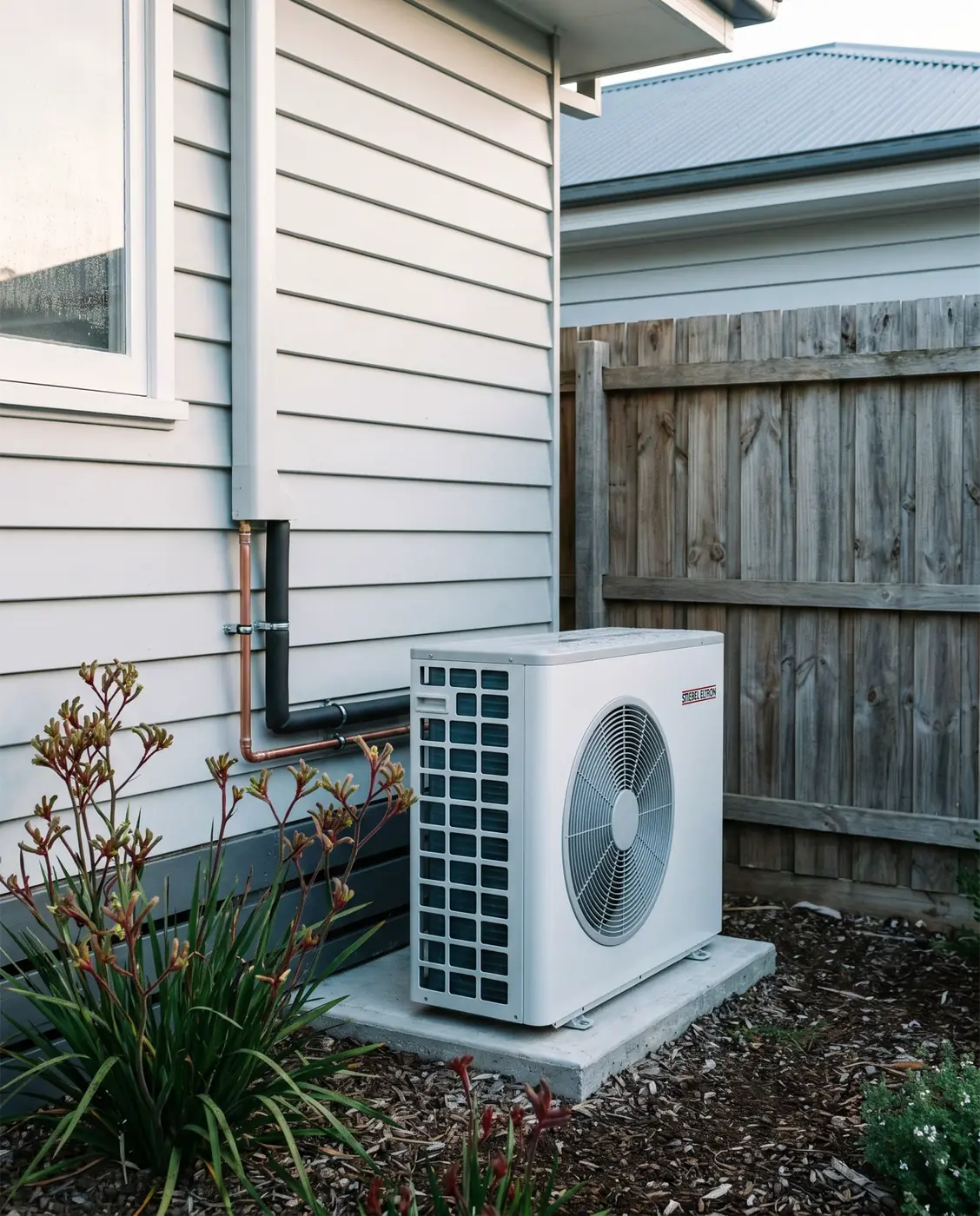
At about 1897 people per square kilometre, Vermont South gives you the choice most inner suburbs do not: ducted through the roof, or a multi-split, without contorting the design around the block. Being around 19 kilometres from the city, Vermont South has the roof space that makes ducted straightforward. The switchboard is more often the limiting factor than the ceiling.
Because Vermont South is in Whitehorse, any work that changes the external appearance of a protected building goes through that council before it goes on the wall. We check the overlay before we quote a wall-mounted condenser. Being next to Burwood East and Forest Hill means Vermont South is almost never a standalone trip for our crew.
The 2021 census figure for Vermont South was 11954 residents. The suburb covers about 6.3 square kilometres of Whitehorse under postcode 3133. It is worth knowing how the suburb was built: The Burwood Rise estate, which occupies a large area between Livingstone and Stanley Roads (and around Dalroy Crescent & Consort Avenue), was developed between 1968 and 1971. That development pattern is a fair guide to the age of the wiring we will find behind the wall.
Vermont South sits within a group of suburbs we are in constantly: Burwood East, Forest Hill, Glen Waverley and Vermont. From our Boronia workshop Vermont South is about 9.1 kilometres west, which is a short enough run that we can usually fit a look-in around another job rather than making it a separate trip.
For context on the older parts of the suburb: The original purchaser of the Morack Road area was John Lobb, who in 1862 subdivided the land into a village called Norwich.