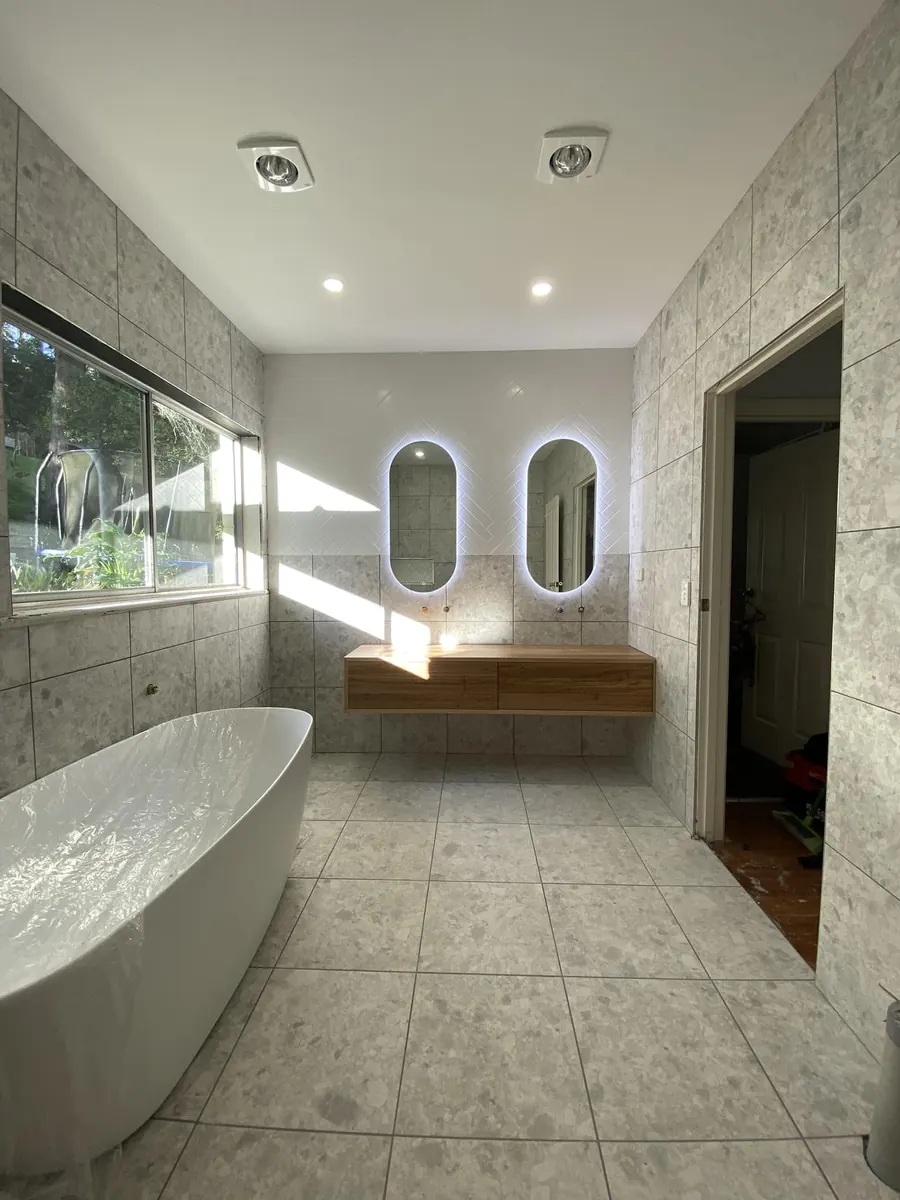
Around 1897 people per square kilometre in Vermont South means the rooms are large enough that spacing and beam angle matter as much as the fitting itself. At about 19 kilometres out, Vermont South sits in the belt where a standard brick-veneer ceiling takes recessed fittings without drama.
Whitehorse covers Vermont South. Council only matters for exterior lighting on a heritage-controlled facade. Because Vermont South backs onto Burwood East and Forest Hill, a second visit is rarely a second trip for us.
There were 11954 people living in Vermont South at the 2021 census, spread over around 6.3 square kilometres in Whitehorse, postcode 3133. For what it is worth on the ladder: The Burwood Rise estate, which occupies a large area between Livingstone and Stanley Roads (and around Dalroy Crescent & Consort Avenue), was developed between 1968 and 1971. Housing age is a good guide to the existing lighting circuit.
The suburbs we work alongside Vermont South are Burwood East, Forest Hill, Glen Waverley and Vermont, and all of them are quoted on the same basis. Vermont South is around 9.1 kilometres west of our workshop in Boronia, close enough that the van is stocked for the job before it leaves.
There is more to the local history than that: The original purchaser of the Morack Road area was John Lobb, who in 1862 subdivided the land into a village called Norwich.