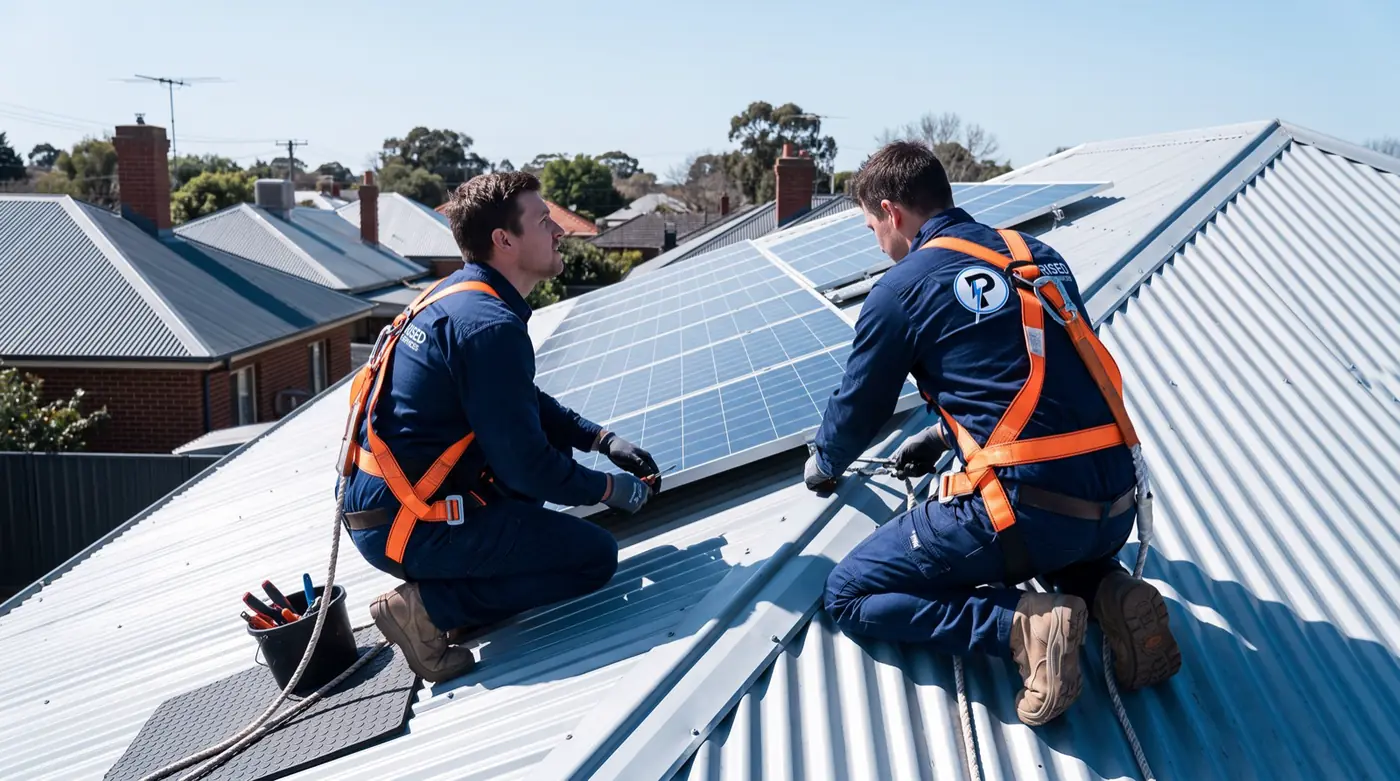
With roughly 2029 residents per square kilometre, Croydon has the block sizes where a 6.6 to 10 kW system fits cleanly and the inverter has somewhere sensible to live. At roughly 124 metres, Croydon sits on the climb east. Slope helps with morning and afternoon capture depending on which way the block falls.
Being around 30 kilometres from the city, Croydon has the newer switchboards that make an inverter connection straightforward. For Croydon, the Maroondah planning scheme only matters if the property carries an overlay. Where it does, a rear or side plane is usually the workable answer.
Given how close Croydon sits to Croydon Hills and Croydon North, a follow-up visit usually costs you nothing extra in travel. Croydon spans roughly 14.1 square kilometres of Maroondah. Postcode 3136, and 28608 people at the 2021 census.
Some local background that shows up on the roof: The Post Office opened on 1 December 1883 after the railway line was established. The era a suburb was built tells us what roofing material and pitch to expect. Croydon sits within a group of suburbs we are in constantly: Croydon Hills, Croydon North, Croydon South and Kilsyth.
Croydon sits roughly 7.9 kilometres north of Boronia, where we are based. That distance is why a call here is answered from a van that is already in the area rather than from a call centre. Because Croydon railway station sits in Croydon, the suburb has the older-core, newer-edge pattern common along Melbourne's lines.
Also worth knowing about the area: On 1 August 1884 it was renamed Croydon railway station. It is also worth knowing that == History ==
Dating back to 1840 the land was first utilised by settlers for grazing and the first road cut through the area now known as Croydon, was initially known as Sawmill Road, as a sawmill was nearby.